What does sales training for asset managers typically include?
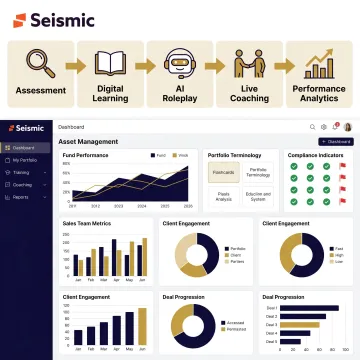
Sales training for asset managers usually includes discovery skills, objection handling, messaging consistency, product and market knowledge, compliance-aware communication, and coaching tied to real conversations. A stronger program also includes practice environments, certifications, and analytics so managers can see whether training is improving readiness, client engagement, and revenue outcomes rather than simply tracking course completion.
How can AI improve sales training for asset management teams?
AI can improve sales training by scoring calls objectively, identifying recurring skill gaps, recommending targeted learning, and supporting reps during live conversations. Instead of relying only on manual reviews, teams get faster feedback on tone, clarity, objection handling, and messaging accuracy. That helps managers coach more consistently and gives sellers practical support before, during, and after client interactions.
Can training be tied to measurable sales performance?
Yes. When training data is connected to deal activity, organizations can track how certifications, coaching sessions, and learning progress influence win rates, pipeline growth, and closed business. This makes it easier to identify which modules actually improve performance, which teams need intervention, and whether professional development investments are producing measurable commercial results.
Is this type of platform suitable for regulated or compliance-sensitive selling environments?
Yes. Structured learning paths, certification tracking, assessments, and call monitoring can support teams operating in compliance-sensitive environments. Organizations can assign required training, monitor adherence to approved messaging, and document completion across teams. This creates a more controlled training process while still giving managers the flexibility to coach communication quality and sales effectiveness.
How long does it take to launch a sales training program for asset managers?
Launch timelines depend on how much existing content, certification structure, and coaching workflow your organization already has. Many teams begin with core learning paths, roleplay scenarios, and call scoring criteria, then expand into analytics and live coaching. A phased rollout often works best because it lets managers establish baseline performance and improve adoption before scaling across larger teams.
Can managers coach individual reps as well as entire teams?
Yes. Managers can review individual call performance, roleplay results, and learning progress while also spotting trends across teams or cohorts. That means coaching can be personalized for one seller or standardized across a broader group. This dual view is especially useful when leaders want to improve consistency without losing visibility into each rep's specific development needs.
What makes Pifini.ai different from traditional sales enablement tools?
Pifini.ai combines enterprise learning, AI roleplay, live call coaching, call scoring, and impact analytics in one platform instead of spreading those functions across multiple tools. It is also positioned as a more affordable option, with pricing at $50 per user per year and no hidden add-ons. That gives organizations a simpler way to manage training, coaching, and measurement together.
Can the platform support certifications and ongoing professional development?
Yes. The platform includes certification workflows, assessments, adaptive learning, and reporting that support both initial onboarding and continuous professional development. Teams can validate mastery, assign refresher training when gaps appear, and track progress over time. This helps organizations maintain standards while giving sellers a clear path for ongoing improvement and readiness.