Introduction
Software sales leaders face a specific, measurable problem: reps spend 70% of their time on non-selling activities, hunting for content, building custom materials, and managing logistics instead of engaging buyers. Meanwhile, buying decisions now involve committees averaging 13 stakeholders, and buyers complete over two-thirds of their journey before ever talking to sales.
Add technically complex products, rapid feature releases, and channel partners operating in isolation, and the gap between rep readiness and buyer expectations becomes a direct threat to win rates and deal velocity.
Effective sales enablement for software companies means equipping both direct sellers and channel partners with the right content, coaching, and technology at the exact moment they need it, so they can engage educated buyers confidently and close deals consistently.
This guide covers the four core pillars of software sales enablement, a step-by-step strategy framework, tech stack decisions that eliminate fragmentation, onboarding and coaching best practices, and how to measure ROI in ways that justify continued investment.
TLDR:
- Software sales enablement must address complex products, multi-stakeholder buying committees, and channel ecosystems simultaneously
- The four pillars, content management, structured training, ongoing coaching, and analytics, must extend to partners and resellers, not just direct reps
- Organizations with formal enablement programs achieve 49% win rates vs. 42.5% without
- Unified platforms eliminate the fragmentation that makes enterprise-wide channel enablement impractical
- AI coaching and prescriptive learning cut ramp time by 26% and boost productivity by over 70%
What Is Sales Enablement for Software Companies?
Sales enablement is a strategic, cross-functional discipline that equips sellers, and their channel partners, with the content, training, coaching, and technology to engage buyers effectively and close deals consistently. Unlike a one-time initiative, it's an ongoing system that adapts as products evolve, competitive dynamics shift, and buyer expectations rise.
Why Software Companies Face Unique Enablement Challenges
Software products evolve constantly. Feature releases happen quarterly or monthly. Pricing models shift from perpetual licenses to subscription tiers. Messaging shifts to reflect new buyer personas or market segments. This velocity creates a persistent enablement gap: by the time reps master the current product story, it's already outdated.
Three compounding challenges make software enablement particularly difficult:
- Informed buyers with high expectations: Software buyers complete most of their research independently, arriving with specific questions about integrations, security, compliance, and ROI. Reps who can't answer confidently lose credibility immediately.
- Multi-stakeholder deal cycles: Deals span IT, finance, operations, and executive leadership, each with different priorities, objections, and evaluation criteria. Reps need role-specific messaging for each persona, on demand.
- Isolated partner and field reps: Resellers, distributors, and alliance partners often receive minimal training, outdated content, and no visibility into what's working. The result: inconsistent positioning, lost deals, and higher support costs.
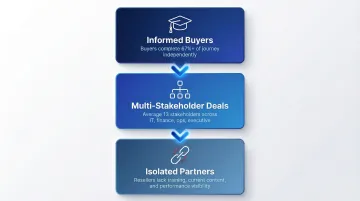
The scale of the problem is measurable. Sales reps spend only 28% of their week actually selling, with the rest consumed by deal management, data entry, and searching for content. That non-selling time erodes pipeline and slows deal velocity.
Revenue Enablement vs. Sales Enablement
Revenue enablement extends the scope beyond direct sellers to include channel partners, customer success, and post-sale teams. For SaaS businesses, the sale doesn't end at contract signature, it extends through onboarding, adoption, expansion, and renewal. This model is becoming the standard for software companies with indirect sales motions: when 50–70% of revenue flows through partners and resellers, enabling only the direct sales team leaves the majority of go-to-market capacity untrained and unsupported.
The 4 Core Pillars of an Effective Software Sales Enablement Program
Pillar 1, Content Management
Software buyers self-educate extensively before engaging sales. They read analyst reports, compare vendor solutions, and evaluate product demos independently. When they finally reach out, they expect sales conversations to be specific, relevant, and backed by proof.
Reps need instant access to current, deal-stage-appropriate content:
- Battlecards that position against specific competitors
- ROI calculators tailored to buyer industry and use case
- Demo scripts aligned to buyer persona and pain points
- One-pagers that summarize technical capabilities for executive stakeholders
- Case studies from customers in the same vertical or facing similar challenges
The problem: 65% of marketing-created sales content goes unused due to findability, relevance, and quality issues. Reps can't find what they need, don't trust what they find is current, or create their own materials from scratch, wasting hours and introducing brand inconsistencies.
Effective content management requires governance, versioning, and outcome tracking. Content must be centralized, searchable, and tied to actual deal results.
When a rep shares a product comparison, the system should track whether that buyer engaged with it, how long they viewed it, and whether the deal progressed. That feedback loop tells marketing which assets drive pipeline and which collect dust.
Platforms like Pifini's Digital Sales Rooms enable reps to share governed content within branded, deal-specific workspaces. Buyers access proposals, case studies, and technical documentation in one centralized hub, and sellers see exactly when prospects open, view, or share assets, providing real-time visibility into buyer engagement.
Pillar 2, Structured Training and Onboarding
Software sales reps need deep product knowledge, competitive positioning, and messaging fluency before they can sell independently. The typical approach, shadow a senior rep for two weeks, then start prospecting, leaves reps unprepared for real buyer conversations.
The cost is measurable. The average ramp-up time for SaaS Account Executives is 5.7 months, with Sales Development Reps requiring 3.2 months. During this period, new hires contribute minimally to pipeline while consuming manager coaching time and generating support tickets.
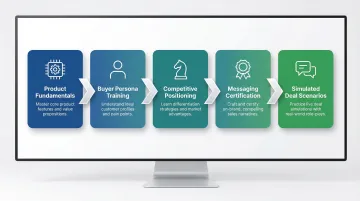
Structured onboarding replaces ad hoc approaches with role-specific learning paths that sequence knowledge logically:
- Product fundamentals covering core features, integrations, and technical architecture
- Buyer persona training explaining the pain points, evaluation criteria, and objections of each decision-maker
- Competitive positioning detailing how to differentiate against specific competitors
- Messaging certification ensuring reps can articulate value propositions clearly and confidently
- Simulated deal scenarios where reps practice discovery, demo delivery, and objection handling before engaging real prospects
Minimum competency thresholds ensure reps demonstrate mastery before advancing. Certifications validate that reps can perform specific tasks, run a technical demo, handle pricing objections, position against a competitor, rather than simply completing a course.
Organizations with formal onboarding boost retention by 82% and productivity by over 70%. That same structured approach cuts ramp-up time by 26%, meaning new reps hit quota sooner and stop draining manager bandwidth.
Pillar 3, Coaching and Continuous Skill Development
One-time training events don't create lasting behavior change. Reps forget concepts, revert to old habits, or struggle to apply training in real customer conversations. Coaching embedded in daily workflows, call analysis, roleplay, and manager-led feedback loops, moves reps from average to top performance.
Most managers support 8–10 reps, which makes personalized coaching reactive by default. High performers get attention when deals stall; average performers receive generic advice. Consistent, individualized coaching rarely happens without a system to support it.
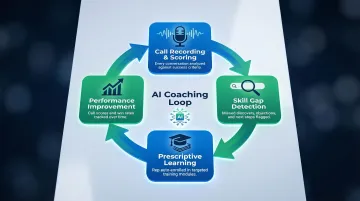
AI-powered conversation analysis fills that gap. Platforms analyze every sales call, score performance against proven success criteria, and surface specific coachable moments:
- Did the rep ask discovery questions before pitching product features?
- Did they address the buyer's stated pain points in their demo?
- Did they handle objections confidently or defer to follow-up?
- Did they ask for clear next steps and set a concrete follow-up date?
When performance gaps are detected, the system automatically enrolls reps into targeted training. A rep who struggles with objection handling receives short, focused modules on that specific skill, not a generic sales training course. This closes skill gaps faster without requiring managers to manually identify struggling reps and assign coursework.
Pifini's AI roleplay simulations allow reps to practice real-world conversations with AI-driven buyers before engaging prospects. Reps receive real-time feedback on messaging clarity, objection handling, and closing techniques, building confidence and consistency through repetition.
Pillar 4, Analytics and Performance Visibility
Enablement without measurement is guesswork. Sales leaders need data across three layers:
Content usage: Which assets are reps sharing? Which get viewed by prospects, and do deals that include ROI calculators, case studies, or technical whitepapers close at higher rates?
Learning completion and competency scores: Are reps finishing onboarding certifications and hitting minimum thresholds? Track time-to-certification as a leading indicator of ramp speed.
Pipeline influence: Do reps who complete advanced training win more? Do certified reps close larger deals or run shorter sales cycles? This is the layer most teams never measure.
The gap is measurable: only 29% of sales enablement teams can directly tie their programs to revenue impact. Most organizations track activity metrics (course completions, content downloads) but can't connect those activities to business outcomes.
Effective analytics platforms integrate with CRM systems to correlate training data with actual deal results. When a rep completes objection handling training, the system tracks whether their win rate improves over the next quarter. When a specific case study is shared in deals, the system measures close rates for those opportunities versus deals without that content.
This visibility enables enablement teams to make a concrete case for investment: "Reps who completed advanced demo training closed 15% more deals and shortened sales cycles by 12 days." That's the difference between a program leadership funds and one they cut.
Partner and Channel Enablement
For software companies selling through resellers, distributors, or alliances, all four pillars must extend beyond the direct sales team. Partner reps who are undertrained or lack access to current content represent a significant revenue leak.
Traditional enablement programs fail here because they're designed for internal-only use. Content repositories require VPN access. Training portals lack external user authentication. Analytics don't track partner performance separately from direct reps.
Platforms built for extended enterprise environments, like Pifini's Partner Enablement Hub, provide partners with the same training, content, and coaching capabilities as direct teams. AI-powered support answers partner program questions instantly, reducing the burden on channel account managers who typically spend the majority of their time answering repetitive questions about certifications, deal registration, and incentives.
Partner training programs have dropped 14.7 percentage points to dead last among vendor support priorities, as partners now rank active co-sell support first. Partners don't want scheduled training events that interrupt their selling time, they want answers available when they need them, in the flow of work.
How to Build a Sales Enablement Strategy for Your Software Company
Step 1, Audit Your Current State
Start with a baseline audit:
- Interview reps and managers to understand what's working and what's broken
- Map the current sales process from lead generation through deal close
- Identify where deals stall and what objections or questions cause delays
- Assess what content exists versus what reps actually use in customer conversations
- Surface training gaps by asking reps which topics they feel least confident discussing
Pull in sales, marketing, RevOps, and channel partner teams, each group holds a different piece of the puzzle. No single team has full visibility into why deals stall, which content gets used, or what coaching would actually move the needle. The audit surfaces those gaps before you start building.
Step 2, Define Business Outcomes and KPIs
Tie enablement goals to specific business outcomes, not activity metrics. Avoid vague objectives like "improve rep readiness" or "increase training completion rates." Instead, define measurable targets:
- Reduce ramp time for new Account Executives from 5.7 months to 4 months
- Improve win rates on forecast deals from 42% to 48%
- Increase average deal size by 15% through better discovery and value-based selling
- Accelerate time-to-close by 10 days by reducing back-and-forth during technical evaluation
Apply the SMART framework, "Increase partner-sourced revenue by 20% in Q3 by certifying 80% of active partner reps" clears the bar. "Improve partner enablement" does not.
Step 3, Align Sales, Marketing, and RevOps
The most common failure point in software company enablement is misalignment between marketing (who creates content) and sales (who uses it). Sales and marketing misalignment costs businesses $1 trillion annually, and 65% of professionals experience a lack of alignment between sales and marketing leaders.
True alignment looks like:
- Shared content calendars where marketing knows which battlecards, case studies, and one-pagers sales needs for upcoming campaigns
- Joint KPIs where both teams are measured on pipeline generated and deals closed, not just leads delivered or content created
- Feedback loops where reps report what's working with buyers and what messaging resonates
- RevOps analytics bridge providing data on which content drives deal progression and which sits unused
Monthly alignment meetings keep this structure working in practice: sales shares recent wins and losses, marketing presents new content, and RevOps reviews what the data shows. Programs that skip this cadence tend to drift out of sync within a quarter.
Step 4, Build and Sequence Enablement Programs
Prioritize programs in phases based on impact and feasibility. Start with the highest-impact gap, usually onboarding or content management, then layer in coaching, partner enablement, and analytics maturity over time.
Typical sequencing:
Phase 1 (Months 1-3): Structured onboarding for new hires with role-specific learning paths and minimum competency certifications
Phase 2 (Months 4-6): Centralized content management with governed, searchable assets tied to deal stages
Phase 3 (Months 7-9): AI-powered coaching with call scoring and automated skill gap remediation
Phase 4 (Months 10-12): Partner enablement hub with external access to training, content, and certification programs
Ongoing: Analytics integration connecting training, content usage, and pipeline outcomes to justify continued investment
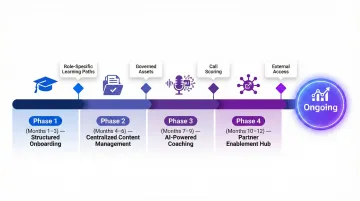
Sequential rollouts let teams demonstrate ROI at each phase before expanding scope, which also makes it easier to secure budget for the next round.
Step 5, Assign Ownership and Create Accountability
Enablement programs fail when ownership is unclear. Define who owns each program component:
- Dedicated enablement function in larger organizations (50+ sellers)
- Embedded in sales ops or marketing in smaller companies
- Hybrid model with a small enablement team supported by subject matter experts from product, marketing, and sales leadership
Create a charter with defined roles and responsibilities. Document decision-making authority, budget ownership, and cross-functional commitments. Secure executive sponsorship, ideally from the CRO or VP of Sales, to ensure enablement programs receive budget and cross-team commitment.
Organizations with a formal sales enablement charter achieve 73.6% quota attainment compared to 57.7% average, representing a 27.6% improvement. Clarity in ownership and accountability directly impacts program success.
Building Your Sales Enablement Tech Stack
The average B2B software organization uses 8 to 10 tools to close deals, leading to 42% of reps feeling overwhelmed. Fragmented tools create data silos, low adoption, and no unified view of what's working. The trend is toward platform consolidation, 84% to 94% of sales organizations plan to consolidate their tech stack to reduce context switching and tool overload.
Essential Tool Categories
Software companies need five core capabilities:
- CRM (foundational data layer): Connects content sharing, training completion, and rep activity directly to opportunities, accounts, and pipeline outcomes
- Sales content management: Centralized repository for battlecards, case studies, ROI calculators, and demo scripts, versioned, tagged by deal stage, and tracked for buyer engagement
- Sales training and LMS: Role-specific learning paths, certifications, and competency assessments with mobile access for distributed teams
- AI coaching and conversation intelligence: Call recording and transcription that flags coachable moments, detects skill gaps, and auto-enrolls reps into targeted training
- Revenue analytics: Dashboards linking content usage and training completion to quota attainment, win rates, and pipeline movement
For companies with channel partners, all five categories need to support external partner access, not just internal reps. Partners require the same training, content, and coaching capabilities as direct teams.
Most legacy platforms don't support external user authentication, partner-specific branding, or role-based permissions for resellers and distributors. That gap is where partner programs stall.
The Hidden Cost of Legacy Enterprise Platforms
Platforms like Seismic, Highspot, and Mindtickle serve large direct sales teams but often leave channel and partner programs underserved. Their pricing structures, typically $300 to $600 per user per year, make comprehensive enablement cost-prohibitive at scale. When you need to enable 500 partner reps across 50 resellers, a $500/user platform becomes a $250,000 annual commitment before implementation fees and integration costs.
The functional coverage is also fragmented: Mindtickle emphasizes readiness assessments, while Seismic and Highspot prioritize content delivery. That forces organizations to stitch together multiple point solutions, which creates disconnected data, poor adoption, and programs that never scale.
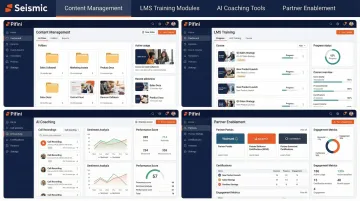
Pifini.ai was built to address both problems. At $50 per user per year, it unifies content management, training, AI coaching, and partner engagement in a single platform. The package includes an enterprise LMS (built on the NetExam foundation), Digital Sales Rooms, AI roleplay simulations, live call copilot, and prescriptive learning automation, designed for both direct reps and partner ecosystems from the ground up.
Integration Checklist
Before adding any new tool, validate:
- Does it connect natively with Salesforce, HubSpot, or your CRM of choice, with bidirectional sync, no manual exports?
- Does it support both direct and partner user roles with appropriate permissions and branding customization?
- Does it tie training completion and content usage to actual deal outcomes and pipeline movement?
- Is it intuitive and mobile-friendly enough that reps adopt it without an onboarding project of its own?
Accelerating Onboarding and Continuous Coaching for Software Sales Teams
The Ramp Time Problem
New reps must master a technically complex product, competitive landscape, multiple buyer personas, and company messaging before they can sell independently. The typical "shadow for two weeks" approach leaves reps unprepared, leading to the 5.7-month average ramp time for SaaS Account Executives.
Structured onboarding programs replace ad hoc approaches with role-specific learning paths:
- Product simulations where reps practice navigating the software interface and explaining key features
- Buyer persona modules detailing the pain points, evaluation criteria, and objections of each decision-maker
- Competitive positioning scenarios where reps defend against specific competitor claims
- Certification with minimum competency thresholds ensuring reps can perform critical tasks (demo delivery, objection handling, discovery questioning) before engaging prospects
- Manager checkpoints at 30, 60, and 90 days to assess progress and identify coaching needs
AI-Powered Coaching at Scale
When each manager supports 8-10 reps, personalized coaching becomes reactive and inconsistent. AI-powered tools close that gap by making feedback systematic rather than situational:
Automated call scoring analyzes every customer conversation against proven success criteria, flagging specific moments where reps missed discovery questions, failed to address objections, or neglected to ask for next steps.
Roleplay simulations allow reps to practice customer conversations with AI-driven buyers in safe, low-stakes environments. Reps receive real-time feedback on messaging clarity, objection handling, and closing techniques.
Prescriptive learning automatically routes reps into targeted training when performance gaps are detected. A rep who scores low on objection handling receives short, focused modules on that specific skill, without manager intervention.
Pifini's AI roleplay and call scoring work together this way, flagging skill gaps and routing reps into relevant training based on actual call performance. The results are measurable: 60% of new reps hit their metrics within five months, compared to 9% previously, cutting ramp time by three months.
Partner Rep Onboarding
The same coaching principles that accelerate direct reps apply, often with even higher stakes, to partner channels. Resellers and distributors frequently receive minimal enablement from software vendors, leading to inconsistent product positioning, lost deals, and increased support costs. Partner-first onboarding programs address this directly:
- Self-paced learning paths accessible on-demand rather than scheduled training events that interrupt selling time
- Certifications with validation mechanisms ensuring partners demonstrate product knowledge before representing the vendor
- AI-powered support providing instant answers to partner program questions about deal registration, incentives, and technical requirements
- Branded partner portals with access to the same content, training, and coaching capabilities as direct teams
Organizations report measurable engagement outcomes from partner enablement: 40% faster training completion, 30% higher program engagement, and 25% more deals registered per quarter when partners have access to structured onboarding and continuous support.
How to Measure Sales Enablement ROI
The Three Tiers of Measurement
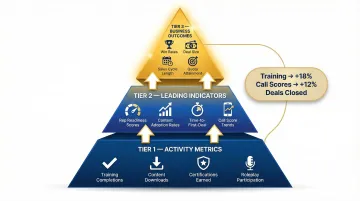
Most organizations only measure activity metrics (training completions, content downloads, certifications earned) and miss the causal chain that justifies enablement investment. Effective measurement spans three tiers:
Tier 1, Activity Metrics:
- Training completion rates
- Content views and downloads
- Certifications earned
- Roleplay participation
Tier 2, Leading Indicators:
- Rep readiness scores and competency assessments
- Content adoption rates (percentage of reps using specific assets in deals)
- Time-to-first-deal for new reps
- Average call scores and improvement trends
Tier 3, Business Outcomes:
- Win rates by rep cohort
- Average deal size
- Sales cycle length
- Partner-sourced revenue
- Quota attainment
Organizations that connect all three tiers into a causal chain can demonstrate: "Reps who completed advanced discovery training (Tier 1) improved their call scores by 18% (Tier 2) and closed 12% more deals with 15% shorter sales cycles (Tier 3)." That kind of concrete chain, from training activity to revenue outcome, is what gets enablement budgets approved and protected.
Key KPIs Software Sales Leaders Should Track
| KPI | What to Measure | Why It Matters |
|---|---|---|
| Quota attainment | By cohort: new hires vs. tenured, direct vs. partner | Reveals which groups benefit most from enablement |
| Win rate by cohort | Certified vs. uncertified; trained vs. untrained | Quantifies the direct impact of specific programs |
| Ramp time | Hire date to first deal; hire date to first quota month | Validates onboarding improvements over time |
| Content engagement | Assets shared/viewed in won vs. lost deals | Identifies what to promote, retire, or refresh |
| Certification coverage | % of direct and partner reps certified | Flags when programs aren't reaching the field |
Organizations with formal sales enablement achieve a 49% win rate on forecast deals compared to 42.5% without, representing a 15.3% improvement. Buyer behavior reinforces the same story: buyers who engage with 9 or more interactive content assets show close rates over 55%, an 8-10x increase compared to zero engagement.
Building the Business Case for C-Suite Investment
Tie every enablement initiative to a specific revenue outcome. Quantify the cost of the current gap:
- Slow ramp: A rep carrying a $1M quota who takes 5.7 months to ramp instead of 4 costs the company roughly $141,000 in lost revenue per hire, just for that 1.7-month gap.
- Low win rates: Lifting win rates from 42.5% to 49% adds 6.5 percentage points to every forecasted deal. Across a full pipeline, that's millions in additional ARR.
- Undertrained partners: When partner-sourced revenue is 50% of total and partners get minimal training, lost deals and longer cycles represent a measurable, and fixable, revenue leak.
Demonstrate ROI through a pilot program with measurable before/after benchmarks rather than asking for broad budget upfront. Select a cohort of new hires or a segment of partner reps, implement structured onboarding and coaching, and track performance against a control group. Use the pilot results to justify broader investment.
Frequently Asked Questions
What is sales enablement for software companies?
Sales enablement equips software sales reps and channel partners with the content, training, coaching, and technology needed to engage buyers and close deals consistently. It closes the gaps that traditional training misses: technically complex products, rapid product roadmaps, and distributed partner ecosystems that need enablement at scale.
How is sales enablement different for SaaS companies compared to other industries?
SaaS companies deal with faster product update cycles, subscription metrics (churn, expansion ARR), and indirect channel models that require enabling external partner reps at scale. Unlike other industries, revenue enablement extends well past the initial sale, covering customer success, onboarding, and renewals.
Who should own sales enablement in a software company?
Ownership varies by size: smaller companies typically embed enablement within sales ops or marketing, while larger organizations build dedicated teams. Either way, success requires a clear charter with buy-in from sales leadership, marketing, and RevOps, organizations with formal charters achieve 27.6% higher quota attainment.
What tools does a software company need for sales enablement?
Core categories include CRM, sales content management, training/LMS, AI coaching and conversation intelligence, and analytics. Unified platforms that consolidate these functions are replacing separate point solutions. Platforms must support both direct and partner user roles for comprehensive channel enablement.
How do you measure the ROI of sales enablement?
Measure across three tiers: activity metrics (training completions), leading indicators (ramp time, rep readiness), and business outcomes (win rates, deal size, cycle length). Linking all three into a causal chain, training completion → rep readiness → win rates, is what gets executive buy-in.
How does AI improve sales enablement for software sales teams?
AI-powered enablement tools can:
- Analyze calls to surface coaching moments and score roleplay simulations
- Recommend relevant content in real time during live deals
- Auto-enroll reps into targeted training when skill gaps are detected
- Provide predictive insights into pipeline health
81% of sales teams report using AI today, and dynamic AI coaching leads to 21.3% improvement in quota attainment.