Introduction
Most sales calls hold far more intelligence than teams ever extract. Without a systematic way to analyze conversations, coaching becomes inconsistent, deals slip through the cracks, and performance gaps go unnoticed until it's too late. According to industry research, up to 99% of B2B sales calls go unreviewed by managers, creating a massive visibility gap at a time when 70% of B2B sales interactions happen virtually.
That visibility gap is exactly what call analytics is built to close. It has evolved from simple call recording into a system that captures, transcribes, and scores every conversation automatically, giving sales leaders a clear picture of what's happening on calls and where performance breaks down. This guide explains what call analytics is, how it works, and how sales teams are using it to turn conversations into measurable results.
Key Takeaways
- Call analytics captures, transcribes, and analyzes sales call data to surface insights on rep performance, buyer behavior, and deal health
- The process runs from automated call capture through AI transcription and analysis to post-call coaching actions and reporting
- Modern platforms include speech analytics, sentiment analysis, predictive deal scoring, and performance benchmarking
- Top-performing teams use call analytics to coach reps faster, replicate winning behaviors, and sharpen forecast accuracy
- AI-powered platforms connect call insights directly to targeted training, reps get coached on exactly what the data flags
What Is Call Analytics?
Call analytics is the systematic collection, transcription, and AI-powered analysis of sales conversations to uncover patterns, measure rep effectiveness, and generate specific coaching signals for performance improvement. Now commonly called "conversation intelligence," it has expanded far beyond basic call tracking, which only captures volume, duration, or caller ID.
Four Types of Call Analytics
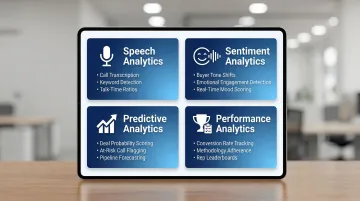
Together, these four intelligence layers form a complete performance picture:
1. Speech Analytics, Transcribes calls, identifies keywords, competitor mentions, objections, and tracks talk-time ratios. This foundation converts audio into structured, searchable data.
2. Sentiment Analytics, Detects emotional tone and buyer engagement shifts throughout the conversation. When a prospect's sentiment drops or a key stakeholder disengages, sentiment analytics flags the moment before it derails the deal.
3. Predictive Analytics, Uses historical call patterns to forecast deal outcomes and flag at-risk opportunities. By analyzing what happens in calls that close versus calls that don't, predictive models score each active deal's likelihood of success.
4. Performance Analytics, Tracks individual rep metrics like conversion rate, objection handling success, and adherence to sales methodology (such as MEDDIC or MEDDPICC).
What Call Analytics Is NOT
To dispel common confusion:
- Not simply call recording software, Recording captures raw audio; analytics extracts intelligence
- Not a CRM, CRMs store data; call analytics generates the data from conversations
- Not a VoIP phone system, Phone systems enable calls; call analytics makes sense of them
These distinctions matter because organizations often already have recording, CRM, and phone tools, and still lack visibility into what's actually happening in their conversations.
Why Call Analytics Is Critical Today
The tools exist, what's been missing is the intelligence layer on top of them. As remote and hybrid selling has grown and sales cycles have lengthened, leaders can no longer rely on ride-alongs or spot-checks. 46% of sales reps report they rarely get feedback on their sales conversations, and 40% cite their manager's lack of time as the main obstacle. AI changes that equation, every conversation gets analyzed, scored, and surfaced for coaching, without adding hours to a manager's week.
How Does Call Analytics Work?
Call analytics operates through a defined sequence of stages, each converting raw conversation data into actionable intelligence.
Call Capture and Initiation
The process begins automatically when a sales call or meeting starts. Modern platforms integrate with Zoom, Teams, Google Meet, and phone systems to join and record without manual triggering by the rep. The process runs automatically and continuously, reps don't need to do anything.
Common dependencies include:
- CRM connection for deal and contact association
- Consent and compliance requirements (including call recording disclosures, GDPR/CCPA compliance)
- Integration with web conferencing tools via bot or native recording APIs
Platforms typically record meetings using a "bot" (a virtual participant added to the meeting) or native recording functionality. Zoom's native recording API, for example, does not require a bot and often yields better audio quality.
Compliance Considerations:
Recording B2B sales calls requires strict adherence to privacy laws. Under GDPR, callers must be informed before recording begins, including the reason for recording, the legal basis, retention periods, and caller rights. In the US, regulations vary by state: two-party states like California require all parties to be informed.
AI Transcription and Analysis
As the conversation unfolds, AI transcribes in real time with high accuracy, creating a searchable, timestamped record. Simultaneously, the platform scans for keywords, objections, competitor mentions, pricing discussions, and buying signals.
What the core AI analysis layer processes:
- Talk-to-listen ratios: Analysis of 326,000 sales calls found the average ratio is 60% talking to 40% listening. Closed-won deals average 57% talk time; lost deals average 62%.
- Question frequency: How often reps ask open-ended discovery questions versus making statements
- Sentiment shifts: Emotional tone changes that signal buyer engagement or disengagement
- Stakeholder engagement patterns: Who speaks, when, and for how long
- Sales methodology adherence: Whether reps are following MEDDIC, MEDDPICC, or other qualification criteria
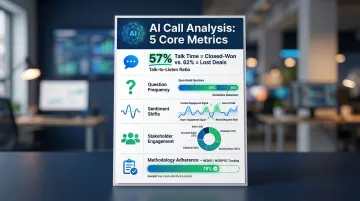
Platforms that track structured qualification processes see 41% higher win rates and 26% shorter sales cycles.
Real-Time Guidance:
Advanced platforms provide real-time guidance during the live call, surfacing battle cards, talking points, or objection responses the moment a relevant keyword is detected. Teams using AI coaching during calls drive 15% higher win rates with automated objection handling and live prompts.
Transcription Accuracy:
Word Error Rate (WER) is the standard metric for transcription quality. Zoom reports a WER of 7.40%, while Microsoft Teams averages 11.54%. Real-world performance with crosstalk and accents sees WERs between 10% and 25%.
Insight Output and Action
Call analytics ultimately produces automated post-call summaries, extracted action items, CRM field updates, and deal-level risk alerts, all generated without manual rep input. This eliminates note-taking overhead and ensures every commitment made on a call is captured.
Downstream processes fed by call analytics:
- Structured coaching data with flagged call moments reaches managers automatically, with comparison benchmarks included
- RevOps teams gain pipeline health signals that tighten forecast accuracy
- Training teams surface aggregate skill gap patterns across the full sales org
The downstream value compounds quickly. With 24% of CRM admins reporting less than half their data is accurate, automating conversation capture directly addresses the data quality gap that manual entry leaves behind, producing cleaner pipelines, faster follow-ups, and more reliable forecasts.
How Sales Teams Use Call Analytics to Drive Performance
Evidence-Based Coaching at Scale
Call analytics transforms rep coaching from subjective and sporadic into evidence-based and consistent. Managers can review flagged call moments, compare rep behaviors against top-performer benchmarks, and give targeted feedback tied to specific timestamps, rather than relying on memory or random call sampling.
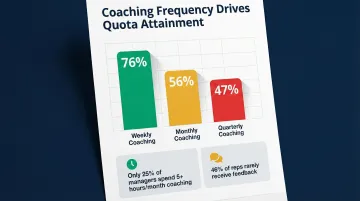
The coaching frequency gap is real:
- Reps coached weekly hit quota at 76%, while those coached monthly drop to 56%, and quarterly to 47%
- Only 25% of managers spend five or more hours monthly coaching reps
- 46% of reps rarely get feedback due to manager time constraints
Real-world impact:
Demandbase used call analytics to review calls and increased their annual contract value (ACV) by 45% in opportunities where calls were reviewed.
Real-Time Deal Intelligence
Call analytics surfaces deal risk in real time. Shifts in buyer sentiment and unresolved objections can appear in conversation data weeks before a forecast review catches them.
Key benefits:
- Flag at-risk deals early, while reps still have time to course-correct
- Companies that pair AI with CRM integration see 30-40% better forecast accuracy than teams relying on manual updates
- Automated CRM field updates cut data staleness at the source, since sales reps waste approximately 27% of their time dealing with inaccurate records
Replicating What Winning Reps Do
Analytics enables teams to replicate what winning reps do by identifying which talk tracks, question sequences, and objection responses correlate with closed deals. Sales leaders can build those patterns into playbooks and onboarding programs, giving every rep a faster path to results.
What this looks like in practice:
- Identify the specific phrases top performers use when handling pricing objections
- Surface the question sequences that consistently move buyers from discovery to demo
- Track which product positioning messages resonate with different buyer personas
- Build training content around proven patterns, not guesswork
Accelerating Ramp Time for New Reps
Those proven playbooks become especially valuable when onboarding new reps. Instead of waiting months to spot skill gaps, AI scoring delivers feedback after every call, shortening the path from hired to productive for both direct reps and channel partners.
Ramp time benchmarks:
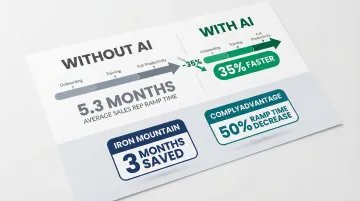
- It typically takes 3 to 9 months for a new salesperson to become fully productive, with an average of 5.3 months
- Account Executives average 4.4 months, while SDRs average 3.2 months
Impact of AI-powered coaching:
- AI-powered coaching tools reduce ramp-up time by 35%
- Iron Mountain reduced new hire ramp time by 3 months using conversation intelligence
- ComplyAdvantage decreased ramp time by 50% using call libraries
Building More Accurate Forecasts
Performance analytics feeds into more accurate forecasting. When predictive models assess buyer engagement, sentiment trends, and objection frequency across all active deals, sales leaders can build forecasts grounded in conversation signals, not just rep-entered CRM data, which is often incomplete or stale.
Forecast accuracy challenges:
- 72% of sales organizations report forecast accuracy below 80%
- Manual/rep judgment forecasting averages 72% accuracy
- AI-enhanced forecasting with process discipline reaches 95% accuracy
Real-world results:
A Forrester study on Clari found that forecast accuracy improved from an 8-9% variance to a 5-6% variance, resulting in board-level trust and a 398% ROI over three years.
How AI Is Reshaping Call Analytics, and Closing the Performance Loop
How AI Turns Call Analytics into a Sales Performance Engine
Why Real-Time Analysis Outperforms Post-Call Review
AI changes what call analytics can actually do. Instead of logging calls for occasional review, AI-powered systems analyze every conversation in real time, flagging objection patterns, scoring rep behavior, and routing that data directly into coaching workflows before the next call happens.