Introduction
Sales reps spend over 400 hours per year hunting for content to share with prospects. That's 10 full work weeks lost to digital scavenger hunts through shared drives, outdated email threads, and scattered cloud folders, time that could be spent selling.
The scenario is painfully familiar: a high-value prospect requests a proposal, your rep scrambles to find the latest pricing deck, copies language from an old pitch that may or may not reflect current positioning, and cobbles together something that looks different from every other proposal your company sends. Meanwhile, your faster, better-prepared competitor has already submitted a polished, on-brand response.
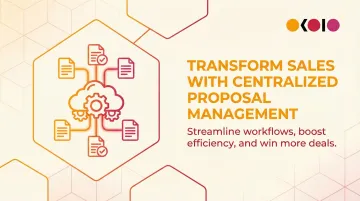
This chaos doesn't just frustrate sales teams, it directly impacts revenue. Centralized proposal management accelerates deal cycles, eliminates costly errors, and scales winning behaviors across your entire revenue organization.
This post covers:
- What centralized proposal management actually means
- Why fragmented workflows silently drain win rates
- How to build a high-performing content repository step by step
- Where AI takes proposal management from operational necessity to strategic advantage
Key Takeaways
- Fragmented proposal systems create version chaos, content sprawl, and brand inconsistency that slow deal cycles and cost revenue
- Centralized management establishes a single source of truth for templates, case studies, pricing, and compliance language
- Structured repositories cut prep time significantly and enable new reps to ramp faster
- AI turns centralized content into a live coaching engine, surfacing the right material at the right moment
The Hidden Cost of Fragmented Proposal Workflows
Three Failure Modes That Quietly Kill Deals
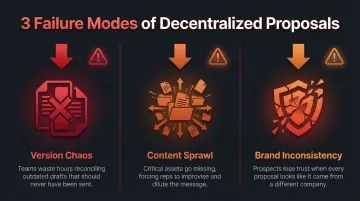
Decentralized proposal management fails in predictable ways. Version chaos occurs when multiple outdated files circulate simultaneously, the February pricing sheet lives in one folder, the March update sits in someone's email, and the April revision exists only on a rep's laptop. Nobody knows which version is current, so prospects receive conflicting information.
Content sprawl buries critical assets across personal drives, Slack DMs, email attachments, and abandoned SharePoint folders. When a top performer leaves, their best proposals disappear with them. New hires can't find examples to learn from. Research shows that 65% of B2B marketing content goes unused due to findability challenges and quality concerns.
Inconsistency undermines brand trust at scale. Each rep produces proposals that look and read differently. One uses the old logo, another references discontinued products, a third invents their own pricing structure. When buyers compare proposals from multiple reps at the same company, or worse, from your direct team and a partner, the inconsistency raises red flags about organizational competence.
The Revenue Impact You Can Measure
This operational mess creates measurable business damage:
- Sales cycles stretch as reps spend time recreating assets instead of advancing deals
- Error rates climb when teams copy-paste stale specs, outdated legal language, or superseded pricing
- Deals slip to competitors who simply respond faster
Companies that wait 24 hours to respond to a query are 60 times less likely to qualify a lead than those who respond within an hour. When your rep needs three days to assemble a proposal from scattered pieces, speed becomes the deciding factor, not product quality.
That speed problem is even more acute across partner ecosystems. Resellers, distributors, and alliance partners lack the product knowledge and brand familiarity of your direct team. Without centralized control, they send proposals that misrepresent capabilities, quote incorrect pricing, or use outdated positioning.
Headquarters loses visibility into what goes to market, and brand consistency disappears across your partner network.
What Centralized Proposal Management Actually Means
Centralized proposal management creates a system where all proposal assets, templates, content blocks, pricing tables, case studies, compliance language, and brand guidelines, live in one governed, searchable repository that every seller and partner accesses in real time. This isn't "just using SharePoint." It's a strategic system built specifically for revenue teams, not a repurposed file folder.
The Core Components of a Centralized System
Four pillars make centralization functional:
- Stores pre-approved, versioned assets with clear approval dates, owners, and usage context, so every case study, product sheet, and ROI calculator is easy to find and trusted on retrieval
- Enforces brand and messaging consistency through standardized templates with locked legal sections, required fields, and uniform visual identity
- Controls access by role: marketing owns brand assets, legal governs compliance sections, and sellers assemble approved components without breaking governance rules
- Connects proposal creation directly to CRM data, auto-populating deal context, triggering relevant content recommendations, and routing submissions through the correct approval chain
Centralization vs. Standardization
Centralization defines where content lives, one authoritative location. Standardization defines how it's structured, approved formats, locked sections, required fields. Both are necessary. Without both working together, you either have one messy folder instead of many, or reps manually applying templates across scattered files. Combined, they create a system that actually scales.
Why This Matters More for Partner Sales Ecosystems
Organizations selling through channel partners face compounded complexity. Indirect sellers don't attend your product trainings, don't participate in daily standups, and don't have direct feedback loops with product teams. A centralized system gives headquarters control while letting partners move quickly within approved guardrails.
Platforms like Pifini connect proposal content management with partner training and enablement in one place, so governance doesn't happen in isolation from broader partner education. When a distributor in another region needs a proposal, they access the same current, approved assets your direct team uses, without calling headquarters for guidance.
That same centralized system also protects institutional knowledge. When your top performer leaves, their winning proposals don't leave with them. Proven approaches are tagged and available across the team, so new hires inherit a working playbook on day one instead of starting from scratch.
How Centralized Proposal Management Transforms Sales Outcomes
Speed: Stop Rebuilding, Start Sending
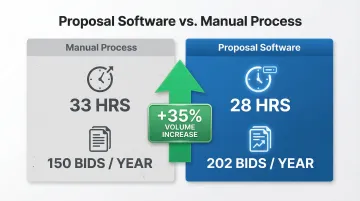
Pre-approved templates and reusable content blocks eliminate proposal assembly from scratch. Organizations using dedicated RFP software spend an average of 28 hours per RFP, five hours less than teams working manually. That time savings compounds across the pipeline:
- Software users submit 202 bids annually versus 150 for non-users, a 35% volume increase
- Approved pricing, case studies, and technical specs auto-populate based on deal context
- What used to take days now takes hours
When your rep opens an opportunity, they select the relevant template and the proposal builds itself around the deal.
Consistency: Build Trust Through Repetition
Every proposal pulling from the same approved library means branding, pricing, and compliance language are always correct. This reduces errors that kill deals, misquoted prices, outdated product specs, superseded legal terms. In regulated industries and high-stakes enterprise deals, consistency isn't cosmetic, it's proof of operational maturity.
Buyers notice when proposals from different reps look identical in quality and professionalism. It signals that your organization runs a tight operation, which builds confidence during evaluation.
Scalability: Onboard Faster, Ramp Quicker
New reps and new partners inherit an established, working proposal workflow on day one. Instead of shadowing top performers for weeks to learn "how we do proposals here," they access the centralized library, see which templates apply to which situations, and start contributing immediately.
This advantage extends to franchise models and partner networks as well. A new distributor in a different region doesn't need custom training on proposal creation, they log into the same system, access region-appropriate pricing and case studies, and send brand-consistent proposals within their first week.
Visibility: Turn Proposals Into Coaching Moments
When proposals are sent from a centralized platform, sales leaders gain visibility into what content is being used, which sections prospects engage with most, and where deals stall. This transforms proposal management from a back-office function into a strategic coaching tool.
Managers can see that prospects consistently skip the technical architecture section but linger on ROI projections, a signal to simplify specs and strengthen financial justification. They can identify reps who ignore updated battle cards and coach them toward better competitive positioning.
Win Rates: Compounding Advantages Add Up
Faster delivery, consistent messaging, and engagement-driven follow-up stack on each other, each factor pushing win rates higher than the last. Proposals viewed by multiple stakeholders nearly double the close rate compared to proposals sent to a single contact. Centralized systems make multi-stakeholder sharing easier through Digital Sales Rooms and collaboration features, directly impacting win probability.
Building Your Proposal Content Repository Step by Step
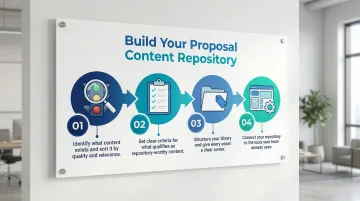
Step 1: Audit and Classify What You Have
Pull every existing sales asset into one staging area. Classify each as:
- Green (approved and reusable immediately)
- Yellow (needs updating before use)
- Red (outdated, archive immediately)
Be ruthless. A lean, trusted repository beats a bloated, ignored one. If you wouldn't confidently send an asset to a customer today, it doesn't belong in your production library.
Step 2: Define What Belongs (and What Doesn't)
Use the gate question framework:
- Does it help move a prospect to the next stage?
- Is it aligned with current brand, pricing, and compliance standards?
- Would you confidently send it to a customer today?
If any answer is "no," it doesn't belong. This discipline prevents repository decay, the gradual accumulation of "maybe useful someday" files that bury the truly valuable assets.
Step 3: Organize for Searchability and Assign Ownership
Organization separates a real repository from another cluttered folder. Choose a primary structure:
- By sales stage (prospecting, qualification, proposal, negotiation, close)
- By content type (case studies, pricing, technical specs, legal templates)
- By industry or persona (healthcare buyers, manufacturing CFOs, IT decision-makers)
Build a controlled tagging taxonomy so reps can filter by multiple dimensions simultaneously. Then assign clear ownership roles, someone is always accountable for keeping each asset current. When product specs change, the product team updates the repository. When legal language evolves, legal owns the refresh.
Governance only holds when it connects to the broader sales system. Platforms like Pifini tie content management directly into partner training and enablement workflows, so ownership accountability doesn't live in a spreadsheet, it's built into how teams operate.
Step 4: Integrate Into Daily Sales Workflows
Structure and ownership get the repository ready. Adoption makes it valuable. Reps won't consult a content library that requires extra steps, the right asset needs to appear where they're already working. Key integrations include:
- When an opportunity moves to "proposal," the CRM surfaces relevant templates and case studies automatically
- Email plugins insert the latest one-pager directly, no file downloads or version checks required
- Proposal tools auto-merge approved pricing and legal sections, so reps never copy-paste terms that might be outdated
When the repository fits naturally into existing workflows, usage follows, and so does consistency across every deal.
How AI Takes Centralized Proposal Management to the Next Level
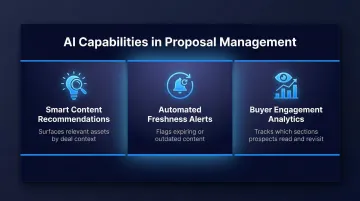
A well-organized repository is the foundation, but AI keeps it alive and performant at scale. Three AI capabilities directly enhance centralized proposal management:
- Smart content recommendations: Surfaces the most relevant case study or pricing sheet based on deal context, industry, stage, persona, without the rep needing to search. Open a healthcare opportunity in the qualification stage, and the system recommends healthcare case studies and ROI calculators automatically.
- Automated content freshness alerts: Flags assets approaching expiry or conflicting with updated messaging, so the repository never silently decays. A popular slide deck referencing outdated positioning triggers an alert to update or archive before it reaches buyers.
- Buyer engagement analytics: Tracks how prospects interact with sent proposals, which sections they linger on, what they skip, how many times they return. A buyer who spent 10 minutes on pricing but ignored implementation timelines signals exactly where to lead the follow-up call.
The Coaching Layer AI Unlocks
When proposals and engagement data are centralized, AI enables a coaching layer that manual systems cannot match. Sales managers can see patterns across the entire team:
- What content correlates with won deals
- Which proposal sections repeatedly lose buyers' attention
- Which reps need support before a deal goes cold
Pifini connects AI-powered content management, buyer engagement insights, and real-time sales coaching in one revenue enablement platform. When a rep's proposals get low engagement, the platform auto-enrolls them in targeted training on proposal storytelling. A new competitive threat triggers updated battle cards pushed to the entire team, with usage tracked to confirm adoption. Proposal management stops being a one-time task and becomes part of how your team continuously improves.
Sellers who partner with AI tools are 3.7 times more likely to meet quota, and organizations with AI-driven enablement functions will achieve 40% faster sales stage velocity by 2029. For teams still managing proposals manually, that gap compounds every quarter.
Frequently Asked Questions
What are 5 things all proposals should include?
Every effective proposal contains a clear statement of the buyer's problem, a proposed solution with specific scope and deliverables, social proof through case studies or testimonials, transparent pricing with clear terms, and a defined next step or call to action that moves the deal forward.
What to include in a content proposal?
A content proposal should cover an executive summary, project scope and deliverables, your methodology and timeline, transparent pricing, and credentials or past work samples. Each element gives the buyer enough context to say yes with confidence.
What is centralized proposal management?
Centralized proposal management is a system where all proposal assets, templates, case studies, pricing, and compliance language, are stored and governed in one platform. Every seller or partner accesses the same approved content, ensuring consistency and eliminating version chaos.
How does centralized proposal management improve win rates?
Centralization cuts response time, keeps messaging consistent across every touchpoint, and gives sales leaders visibility into buyer engagement. The combined effect is higher proposal quality, shorter deal cycles, and measurably better close rates.
How does AI improve the proposal management process?
AI recommends relevant content based on deal context, flags outdated assets before they reach buyers, and tracks engagement signals after proposals are sent. It also surfaces coaching insights so sales managers can improve team performance over time.
How is a proposal content library different from a shared drive?
A shared drive is unstructured storage. A content library is a governed system with version control, role-based access, searchable tagging, approval workflows, and integration into sales tools, keeping content easy to find, always current, and tied directly to revenue workflows.