Introduction
Cold calling remains one of the toughest jobs in sales, and the numbers prove it. The average rep connects with just 5.4% of prospects, requiring 19 dials to reach a single conversation. Meanwhile, sales reps spend 70% of their time on non-selling tasks, with CRM data entry alone consuming 10-11 hours weekly. Burnout is real: median SDR turnover sits at 40% annually.
AI directly addresses those numbers. Reps get more qualified conversations without adding dials, because AI handles research, lead prioritization, and follow-ups automatically, freeing human reps to do the work that actually closes deals: building rapport and earning trust.
This guide covers how AI cold calling works, the real-world benefits, proven best practices, what to look for in tools, and the KPIs that prove ROI.
Key Takeaways
- AI cold calling automates prep, prioritizes leads, coaches reps in real time, and streamlines follow-ups
- Benefits include higher connection rates, faster rep ramp-up, consistent personalization, and 70% less CRM admin burden
- Define KPIs first, integrate with your CRM, and let AI handle prep and live coaching
- Compliance is non-negotiable, understand TCPA, GDPR, and consent requirements before launch
- Unified platforms that connect call intelligence, coaching, and training outperform standalone dialers
What Is AI Cold Calling?
AI cold calling applies artificial intelligence to automate, enhance, and optimize outbound calling workflows, without replacing human reps. The AI handles data processing, lead scoring, real-time coaching, and administrative tasks while salespeople focus on building relationships and navigating complex conversations.
This is not robocalling. AI cold calling keeps humans as the primary communicators, using AI to support them with data, coaching cues, and automation. Robocalls are pre-recorded automated messages with no human involvement. The distinction matters legally: the FCC's February 2024 Declaratory Ruling classifies AI-generated voices as "artificial or prerecorded," requiring prior express consent under TCPA. AI cold calling assists human reps; robocalls replace them.
Underlying AI Technologies
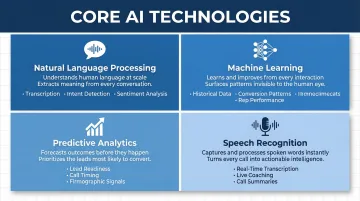
Four core technologies power AI cold calling:
- Natural Language Processing (NLP) - Analyzes natural language by transcribing spoken words into text, detecting intent, and identifying sentiment cues
- Machine Learning - Continuously improves recommendations over time by analyzing historical call data, conversion patterns, and rep performance
- Predictive Analytics - Forecasts lead readiness and optimal call timing based on firmographic data, engagement signals, and past conversion behavior
- Speech Recognition - Transcribes and analyzes conversations in real time, enabling live coaching and automated call summaries
Key Benefits of AI in Cold Calling
Smarter Lead Prioritization
ML models analyze firmographic data, engagement signals (email opens, website visits), and historical conversion patterns to score and rank leads, so reps spend time on prospects most likely to convert rather than working static lists. Manual lead qualification takes 5-15 minutes per lead, consuming 40-60% of an SDR's available time.
AI-powered lead scoring delivers measurable impact: companies using AI for lead scoring experience a 30% improvement in conversion rates, while AI qualification cuts the cost per qualified lead by over 50% and recovers 30-40% of rep time.
Hyper-Personalization at Scale
AI analyzes CRM history, company news, social media activity, and recent behaviors to surface tailored talking points per prospect in seconds, eliminating the 15-30 minutes of manual research previously required per call. Sellers using AI agents expect a 34% reduction in prospect research time.
Personalized cold calls are 20% more likely to result in a positive outcome, and 82% of business buyers accept meetings with cold callers who reach out proactively.
Real-Time Coaching and Objection Handling
During a live call, AI listens, transcribes in real time, and surfaces relevant objection responses, battlecards, or product proof points on the rep's screen the moment a trigger phrase, "too expensive," "already have a vendor", is spoken. This happens without breaking the rep's conversational flow.
That combination of human judgment and AI guidance is more effective than either alone. A randomized field experiment published in the Journal of Marketing found that pairing AI coaching with human reps outperformed both AI-only and human-only approaches, reducing information overload for struggling agents while preserving the instincts top performers rely on.
Pifini.ai applies this directly: its live call copilot surfaces objection handling prompts, relevant content, and suggested next steps in real time, so reps can respond with confidence without losing momentum in the conversation.
Automated Follow-Ups and CRM Hygiene
AI auto-logs call outcomes, generates post-call summaries with action items, schedules follow-up tasks, and sends personalized follow-up emails based on what was discussed. No manual note-taking, no leads falling through the cracks.
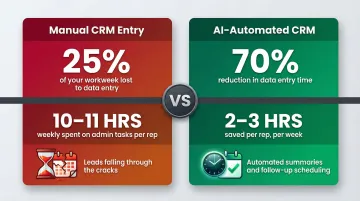
Sales reps spend roughly 25% of their workweek on manual CRM data entry. Automated data entry reduces CRM data entry time by up to 70%, saving teams 2-3 hours per rep per week and freeing capacity for revenue-generating activities.
Faster Rep Onboarding and Consistent Team Performance
AI-powered call scoring and coaching accelerates ramp time for new reps by giving them real-time guidance that replicates what experienced reps know instinctively. The average SaaS Account Executive ramp time is 5.7 months; SDRs take 3.0-3.2 months.
AI-powered coaching tools reduce ramp time by roughly 35%, while a Gong case study with ComplyAdvantage reported a 50% decrease in new rep ramp time. Beyond speed, the consistency gain matters: when every rep draws from the same scored calls, coaching data, and validated responses, performance stops depending on tenure or luck.
AI Cold Calling Best Practices
Define Your KPIs Before Deploying Any AI Tool
Without clear baselines, it's impossible to attribute improvement to AI. Reps and leaders should align on specific targets before launch, not after. Establish benchmarks for connection rates, conversation-to-meeting rates, and pipeline generated per call volume so you can measure AI's actual impact.
KPIs to Track
Focus on metrics that measure both activity and outcome:
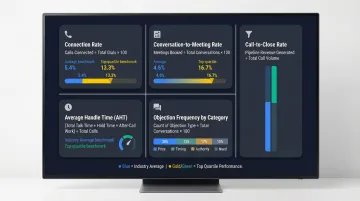
- Connection Rate - Total calls answered ÷ total dials made. Average is 5.4%; top quartile is 13.3%
- Conversation-to-Meeting Rate - Prospects who agreed to a next step. Average is 4.6%; top quartile is 16.7%
- Call-to-Close Rate - Pipeline generated per call volume, tracking how many calls convert to opportunities
- Average Handle Time - (Talk Time + Hold Time + After-Call Work) ÷ Total Number of Calls, measuring efficiency
- Objection Frequency by Category - Which objections appear most often, helping prioritize coaching and training
AI helps shift emphasis from volume to quality. Track activity, but prioritize outcome-based metrics that predict revenue.
Use AI to Prepare Reps Before the Call, Not Just During It
Pre-call planning is where AI delivers consistent, measurable time savings. Before dialing, AI should generate prospect research summaries, suggest a personalized script or talk track, and surface relevant case studies or pain-point angles.
AI roleplay and simulation tools allow reps to rehearse calls and receive AI-scored feedback on tone, clarity, and objection handling. When gaps are identified, reps are automatically enrolled in targeted training, connecting practice directly to performance.
Pifini.ai takes this further by triggering training enrollment based on call scoring results, so coaching is always tied to what each rep actually struggled with on their last call.
Start with a Focused Pilot, Then Scale
Begin AI cold calling with a subset of reps or a single use case, objection handling only, for example. This validates ROI, surfaces configuration issues, and builds internal champions before org-wide rollout. Pilots also give you the data to refine AI recommendations and ensure the tool fits your workflow before committing to full deployment.
Integrate AI with Your CRM from Day One
AI recommendations are only as accurate as the data behind them. Native CRM integration ensures real-time data sync so lead scores, engagement history, and call outcomes are always current, and AI isn't working from stale information.
Before committing to a platform, ask vendors:
- How frequently does CRM data sync, real-time or batch?
- What data flows bidirectionally between the AI tool and your CRM?
- Does the integration reduce maintenance burden, or add to it?
Platforms that sync natively with Salesforce, Microsoft Dynamics, or Oracle Fusion Applications eliminate manual data reconciliation and keep AI insights accurate.
Treat Compliance as Part of the Workflow, Not an Afterthought
AI-assisted calling carries real legal exposure. Key requirements include:
- TCPA - The FCC's 2024 ruling classifies AI-generated voices as "artificial" calls requiring prior express consent
- GDPR - For EU operations, establish a lawful basis for processing personal data during live marketing calls, and ensure call recordings comply with data protection laws
- Do-Not-Call Registry - Most B2B calls are exempt, but verify compliance with National Do Not Call Registry provisions
Confirm that your platform automates consent verification and maintains audit trails before any calls go out. Compliance violations carry steep penalties and reputational damage.
What to Look for in an AI Cold Calling Tool
In-Call Intelligence vs. Pre/Post-Call Only
Tools that only help before or after a call, script generators, call recording analysis, add value, but real-time support during the call itself delivers stronger outcomes. Live coaching changes results while deals are still in play, not just in post-call review.
Unified Platform vs. Point Solution
Standalone dialers, conversation intelligence tools, and lead scoring apps create data silos that reduce AI accuracy. A unified platform, one that connects call intelligence, lead scoring, rep coaching, and training, gives AI complete context for every recommendation.
Pifini.ai is built around this feedback loop: AI evaluates every call, flags performance gaps, and routes reps into targeted training, all within the same system. Standalone dialers can't replicate this because they lack the integrated coaching and training infrastructure to connect evaluation to action.
CRM and Tech Stack Integration Depth
Integration quality determines whether AI recommendations stay accurate or go stale. When evaluating vendors, ask:
- CRM sync frequency (real-time vs. batch updates)
- Which data fields flow bidirectionally
- Whether the integration adds maintenance overhead or reduces it
Native integrations to Salesforce, Microsoft Dynamics, and Oracle Fusion Applications eliminate manual data reconciliation and keep AI context current.
Scalability and Pricing Model
Enterprise-grade AI cold calling features should not require enterprise-scale budgets. Before committing, evaluate:
- Cost per user at your current team size and projected growth
- What's included in the base price vs. gated behind add-ons
- Whether pricing stays predictable as headcount scales
Pifini.ai delivers a unified revenue enablement platform, combining call intelligence, coaching, training, and partner enablement, for $50 per user per year, compared to $300–$600 per user per year for competitors like Seismic, Bigtincan, and Mindtickle.
Common Challenges and Compliance Considerations
Data Quality Is the Foundation
AI cold calling performance is directly constrained by the completeness and accuracy of CRM and engagement data. Teams with inconsistent logging, siloed systems, or incomplete records will see diminished AI outputs. Data hygiene investment is a prerequisite, not optional.
Before deploying AI, audit your CRM for:
- Missing or outdated contact details
- Gaps in engagement history and activity logging
- Incomplete or stale lead scores
- Siloed data across disconnected tools
AI amplifies data quality, both good and bad. Fix the foundation first.
Change Management and Adoption
Many AI deployments fail not because of technology but because reps don't trust or use the AI recommendations. Dedicated training on how to interpret AI suggestions, when to override them, and how to give feedback is essential to adoption.
Involve reps early in the pilot process. Show them how AI saves time and improves outcomes. Build internal champions who can evangelize the platform across the team.
AI Amplifies Skill Gaps as Well as Strengths
AI coaching shows reps what "good" looks like, but reps who don't act on feedback won't improve. The most effective teams pair AI insights with structured coaching accountability, making manager review of AI-scored calls part of the weekly rhythm, not just a one-time exercise.
Platforms like Pifini.ai close this loop by routing struggling reps directly into targeted training when call scoring flags a gap, no manual intervention required.
Compliance Considerations
AI cold calling tools operate in a heavily regulated environment. Before scaling any outbound program, teams need to understand the legal guardrails that apply.
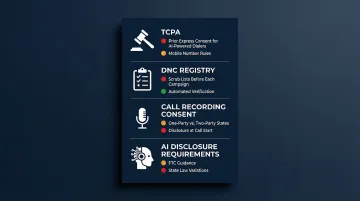
Key compliance areas to address:
- TCPA (Telephone Consumer Protection Act): Governs auto-dialed and prerecorded calls to mobile numbers in the US. Obtain prior express consent before calling mobile leads with AI-powered dialers.
- DNC Registry: Scrub call lists against the National Do Not Call Registry before each campaign. Many AI dialing platforms automate this, but verify it's enabled.
- Call recording consent: One-party vs. two-party consent laws vary by state. Always disclose recording at the start of the call in two-party consent states (California, Florida, Illinois, and others).
- AI disclosure requirements: Some jurisdictions and enterprise buyers now require disclosure when an AI agent, rather than a human, initiates contact. Check current FTC guidance and applicable state laws.
Build compliance checks into your AI deployment process from day one, not as an afterthought.
Frequently Asked Questions
What is the AI tool for cold calling?
AI cold calling tools fall into three main categories: conversation intelligence platforms (transcription and coaching), predictive dialers (call timing and automation), and unified revenue enablement platforms that combine all three. The right choice depends on whether your team needs a standalone capability or an end-to-end workflow.
How to use AI to practice cold calling?
AI roleplay tools let reps rehearse calls against simulated prospect personas and receive scored feedback on messaging, tone, and objection handling. Reps can also be automatically enrolled in targeted training for areas where they consistently struggle, making practice structured and personalized.
What is KPI in cold calling?
KPIs (Key Performance Indicators) in cold calling are measurable metrics used to evaluate effectiveness, including Connection Rate, Conversation-to-Meeting Rate, Call-to-Close Rate, Average Handle Time, and Objection Frequency. AI helps teams move beyond tracking volume alone and focus on quality metrics that predict pipeline outcomes.
Will AI replace human cold callers?
AI handles the mechanical side, data processing, lead prioritization, and routine automation, so human reps can focus on rapport, complex conversations, and closing. The most effective teams use AI to sharpen what their reps do, not to replace them.
How does AI cold calling differ from robocalling?
AI cold calling keeps human reps as the primary communicators, supported by AI-powered coaching, transcription, and automation in the background. Robocalls are pre-recorded automated messages with no human involvement, and they face stricter legal requirements under TCPA as a result.
How long does it take to see results from AI cold calling?
Early productivity gains, connection rate improvements, reduced admin time, are often visible within the first few weeks. Meaningful conversion and pipeline metrics typically emerge within one to two quarters as reps adopt AI recommendations and configurations are refined based on real call data.