Introduction
Many sales and revenue leaders face a costly gap: 65% of companies that outperformed revenue targets had dedicated enablement teams, compared to just 24% of underperformers. Yet enablement platforms have multiplied faster than their ability to deliver measurable results. Most were built for a world before AI—and bolting AI onto legacy architecture produces different outcomes than building AI-native from the ground up.
SalesHood and Pifini represent two different bets: layering AI onto an existing platform versus designing every module around AI from day one. For partner-led and enterprise sales ecosystems, that architectural difference has real consequences.
The wrong choice means paying for tools your channel partners won't use, training programs that don't tie to revenue, and AI features that feel bolted on rather than built in.
The stakes are measurable: according to Gartner research, sales organizations with AI-driven enablement will achieve 40% faster sales stage velocity by 2029 than those using traditional approaches. What follows is a direct comparison of how each platform delivers — or doesn't — on that promise.
Key Takeaways
- SalesHood targets direct sales teams with AI roleplay, content management, and digital sales rooms at $45/user/month
- Pifini bundles enterprise LMS, live call coaching, and prescriptive learning at $50/user/year—roughly 10x cheaper, built for partner ecosystems
- SalesHood layered AI onto an existing platform; Pifini's AI is foundational, enabling automation like auto-enrolling reps into training after a failed call
- SalesHood's direct-sales focus limits channel programs; Pifini includes branded partner portals and multi-tier support out of the box
- Pick SalesHood for proven direct-sales tools and deep CRM integration; pick Pifini for unified AI enablement across partner ecosystems at enterprise scale
Pifini vs SalesHood: Quick Comparison
| Dimension | SalesHood | Pifini |
|---|---|---|
| AI Architecture | AI features added to existing platform (roleplay, pitch scoring, content audit) | AI-native design—every module built around AI from day one |
| Pricing | $45/month (Essential), $65/month (Pro), $85/month (Unlimited) | $50/user/year, all-inclusive |
| Partner/Channel Support | No dedicated partner portal or multi-tier distribution tools | Partner Enablement Hub, AI CAM, multi-tier support built-in |
| LMS Included | Learning Management included but limited customization, scalability issues reported | Enterprise LMS (NetExam rebranded) with certifications, prescriptive learning, gamification |
| Real-Time Call Coaching | Post-interaction feedback on roleplay and pitch practice | Live AI copilot during actual customer calls with real-time prompts |
| Ideal Use Case | Direct B2B sales teams needing content management and AI practice tools | Partner-led ecosystems requiring unified enablement, LMS, and live coaching at scale |
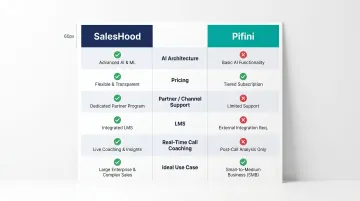
The cost gap grows fast at scale. At 200 users, SalesHood Pro (monthly-billed at $65/user) runs $156,000/year, while Pifini's annual plan comes to $10,000—a $146,000 difference. At 500 users, that spread reaches $390,000 vs. $25,000, making platform choice a significant budget decision, not just a feature one.
What is SalesHood?
Founded in 2013 by former Salesforce executive Elay Cohen and co-founder Arthur Do, SalesHood began as a video-based social learning platform and evolved into a full revenue enablement suite covering content, learning, AI coaching, and buyer collaboration. The platform serves direct B2B sales organizations with tools spanning content management, learning management, AI-powered roleplay, digital sales rooms, and mutual action plans.
SalesHood's core strengths include:
- AI Coaching Agents with roleplay simulations offering real-time feedback on clarity, positioning, and execution
- Huddles and Paths — structured learning formats for organizing and sequencing training content
- Content management with AI-powered auditing to identify outdated or underperforming assets
- Digital Sales Rooms for buyer collaboration
- Salesforce Correlation Engine (Pro tier and above) linking enablement activities to CRM data and revenue outcomes
For direct sales teams, that feature depth is a genuine asset. Organizations managing partner ecosystems, though, will run into some clear gaps:
- Per-seat pricing built for internal sales teams: Essential ($45/month), Pro ($65/month), Unlimited ($85/month) — costs that compound quickly across distributed partner networks
- No dedicated partner portal or channel-specific features mentioned across product pages or 825+ G2 reviews
- Learning curve concerns: G2 reviewers describe the admin interface as "clunky" when managing large content libraries, with search functionality that becomes "cluttered" at scale
- Scalability challenges: TrustRadius users report the system becoming "bogged down, slow, and clunky" with 8,000+ concurrent users
- AI as enhancement: Features like AI roleplay and pitch practice were integrated into an existing architecture rather than designed as the foundational layer
SalesHood is a solid fit for direct sales teams with strong Salesforce dependencies. For organizations whose revenue runs through resellers, distributors, or alliances, those same architectural choices become real constraints.
What is Pifini?
Pifini built its platform around a single philosophy: Performance Infinity. When AI, data, and automation work together as a unified system, improvement becomes continuous and measurable. Every module was designed with AI at the center from day one — not added on after the fact.
Pricing that changes the economics of enablement: $50 per user per year, all-inclusive. That covers everything: Enterprise LMS powered by NetExam, Live AI call coaching, Digital Sales Rooms, and the Partner Enablement Hub. No add-ons, no hidden implementation fees, no per-module upsells.
To put this in perspective: enterprise LMS solutions alone typically cost $60,000-$250,000+ annually at enterprise scale, with implementation fees reaching $40,000-$150,000. Pifini bundles that capability with enablement tools at a fraction of the cost.
Partner-first architecture sets Pifini apart. While SalesHood optimizes for internal sales reps, Pifini was purpose-built for resellers, distributors, and channel alliances. This means:
- Onboarding flows designed for external partners, not employees
- Branded partner portals with role-specific training tracks
- Certifications tied to deal registration workflows
- Analytics that flow back to vendors for partner performance visibility
- AI CAM (Channel Avatar Manager)—a 24/7 AI concierge answering partner questions about programs, incentives, and requirements
Live AI call coaching works during the conversation, not after. Pifini's AI evaluates calls in real time, surfaces guidance mid-conversation, and automatically routes users into targeted training when gaps are detected. According to Revenue.io data, real-time coaching improves conversion rates by 26% and accelerates objection handling response times by 4x compared to post-call-only approaches.
Prescriptive learning closes the loop. When performance data identifies a gap — whether from call scoring, roleplay results, or deal outcomes — Pifini's LMS auto-enrolls users into training without manual assignment. Enablement stops being an administrative task and starts driving measurable behavior change.
Enterprise customers including AMD, Blue Cross, Hexagon, and Sabre reflect Pifini's ability to scale across large, distributed ecosystems — the kind of complex partner environments where legacy platforms typically price themselves out.
Pifini vs SalesHood: Head-to-Head Breakdown
AI Architecture: Built-In vs Bolted-On
SalesHood enhanced an existing platform with AI features—roleplay simulations, pitch scoring, content audits. These are valuable capabilities, but they operate within module boundaries.
Pifini engineered AI as the operating layer from day one. According to ThoughtSpot's framework, AI-native platforms differ from AI-augmented ones like "a modern smartphone designed around apps versus an old flip phone with apps awkwardly added later."
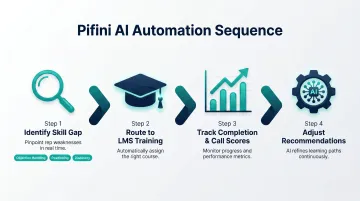
Why this matters in practice: Native AI can act across modules simultaneously. When Pifini's call scoring flags a failed customer conversation, it automatically:
- Identifies the specific skill gap (objection handling, product positioning, discovery)
- Routes the user into targeted LMS training within the enterprise learning system
- Tracks completion and improvement through subsequent call scores
- Adjusts recommendations based on performance trends
SalesHood's AI roleplay provides valuable practice feedback, but it operates within the training module. The connection to live performance, CRM data, and learning paths requires manual coordination.
Gartner research shows AI-native companies are scaling 40% faster than traditional SaaS providers—a meaningful advantage as organizations expand enablement across growing partner networks.
Pricing and Total Cost of Ownership
The cost difference becomes dramatic at scale:
| Plan | 200 Users/Year | 500 Users/Year |
|---|---|---|
| SalesHood Essential ($45/user/mo) | $108,000 | $270,000 |
| SalesHood Pro ($65/user/mo) | $156,000 | $390,000 |
| SalesHood Unlimited ($85/user/mo) | $204,000 | $510,000 |
| Pifini ($50/user/year) | $10,000 | $25,000 |
These calculations assume no additional LMS costs. While SalesHood includes Learning Management in all tiers, G2 reviewers note real limitations: non-intuitive course creation, inability to clone learning path segments, and limited visual customization.
Organizations requiring full enterprise LMS capabilities—certifications with proctoring, prescriptive auto-enrollment, advanced analytics, multi-language support—may need supplementary systems at additional cost.
Pifini's NetExam-powered enterprise LMS is included at the $50/year price point, bundling capabilities that would cost $60,000-$250,000+ annually as standalone solutions.
For partner-led organizations needing to enable hundreds or thousands of external users, Pifini's economics change what's possible. The difference between $390,000 and $25,000 annually determines whether you can afford to train every partner or must ration enablement to top performers only.
Partner Ecosystem vs Direct Sales Fit
SalesHood's content model, digital sales rooms, and analytics were designed for a rep-to-buyer direct motion. No partner portal, channel-specific analytics, or multi-tier distribution support appears on product pages or in 825+ G2 reviews.
Pifini's multi-tier architecture reflects a different design philosophy:
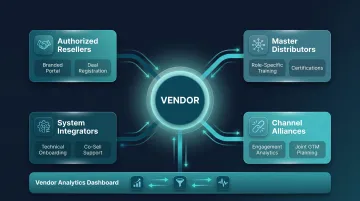
- Branded partner portals where resellers log in and experience enablement as an extension of the vendor relationship
- Role-specific training tracks delivering content relevant to each tier (authorized resellers vs. master distributors vs. system integrators)
- Certifications tied to deal registration ensuring partners meet requirements before accessing co-op funds or qualified leads
- Engagement data flowing back to vendors through analytics showing which partners are training, which are struggling, and where intervention improves performance
According to Forrester research, 67% of ecosystem leaders expect indirect revenue to grow 30%+ year-over-year. Organizations investing in that growth need platforms architected for it—not direct sales tools adapted afterward.
LMS Capabilities and Prescriptive Learning
SalesHood's "Huddles" and "Paths" offer flexible learning structures manually curated by enablement managers. Content gets organized, assignments get created, users complete training. It's a traditional LMS workflow integrated with enablement tools.
Pifini's enterprise LMS replaces that manual loop with prescriptive learning that responds to performance signals automatically:
- Auto-enrollment based on performance signals: Low call scores trigger relevant training assignments automatically
- Adaptive learning paths adjusting to user progress and knowledge gaps
- Certifications with proctoring and analytics validating mastery
- Gamification and microlearning driving engagement through leaderboards, achievements, and bite-sized modules
- Simulations mirroring real-world scenarios where users practice before live execution
That shift directly reduces administrative burden. SalesHood requires managers to identify struggling reps, determine appropriate training, and manually assign courses. Pifini detects gaps and responds automatically—scalable across thousands of partners without adding headcount.
Real-Time Call Coaching vs Post-Recording Analysis
SalesHood's AI pitch practice lets reps record scenarios and receive feedback on clarity, positioning, and execution. This is valuable for skill development and onboarding preparation.
Pifini's live AI call support operates during actual customer conversations. The AI evaluates tone, pacing, question strategies, and objection handling in real time, surfacing relevant resources (case studies, product sheets, ROI data) and coaching prompts without disrupting the call flow.
Post-recording analysis improves future calls. Real-time coaching can save deals in progress — a meaningful distinction when every conversation counts.
Revenue.io data demonstrates the gap: 26% higher conversion rates with real-time guidance, and 4x faster objection-handling responses when reps receive live cues. For partner sellers who handle fewer calls than full-time reps, maximizing each conversation's success rate becomes especially critical.
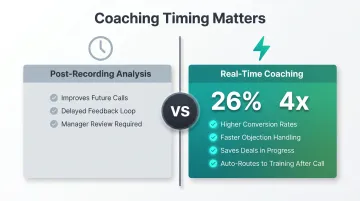
After the call, Pifini's scoring closes the loop — routing users into targeted training based on what actually happened, not what a manager guesses might be the problem.
Which Platform Is Right for You?
Choose SalesHood if:
- Your organization runs a direct B2B sales team with minimal partner motion
- You already have enterprise LMS infrastructure and need enablement tools to complement it
- AI-powered roleplay and pitch practice for internal reps are top priorities
- Strong Salesforce integration and correlation to CRM data matter more than partner-specific features
- Your budget accommodates $65-$85/month per user ($780-$1,020/year)
Choose Pifini if:
- Your revenue model includes channel partners, resellers, distributors, or alliances
- You need an enterprise LMS with prescriptive learning included, not purchased separately
- Real-time AI call coaching during live conversations would improve win rates
- Scaling enablement across hundreds or thousands of users requires dramatically lower per-seat costs
- Partner-first design (branded portals, certifications tied to deal registration, multi-tier analytics) aligns with how your revenue ecosystem actually operates
Request a Pifini demo to see how AI-native enablement changes what's possible at $50/user/year.
For pure direct-sales SMB teams with limited partner motion and existing LMS infrastructure, SalesHood remains a proven choice. Its decade-plus CRM integration and internal rep coaching tools hold up well—as long as your go-to-market stays direct and partner scale isn't on the roadmap.
Frequently Asked Questions
Is SalesHood designed for partner and channel sales ecosystems?
SalesHood is built primarily for direct B2B sales teams. Its content management, training, and analytics optimize for internal reps selling to buyers. Organizations running partner or channel programs typically need platforms built specifically for multi-tier distribution — with branded portals, reseller workflows, and external user management that SalesHood doesn't provide.
How does Pifini's pricing compare to SalesHood at scale?
Pifini's $50/user/year all-inclusive model creates a significant cost gap at scale. At 200 users, Pifini costs $10,000/year while SalesHood Pro costs $156,000/year—a $146,000 difference. SalesHood's per-seat monthly pricing plus potential LMS add-ons compound total cost as headcount grows.
What does "AI-native" mean in the context of sales enablement?
AI-native means AI was designed into the platform architecture from the start, enabling cross-module automation like triggering LMS enrollment from a failed call. AI features added to existing platforms operate within module boundaries and can't coordinate actions across training, content, and analytics without manual integration.
Does SalesHood include an enterprise LMS?
SalesHood includes learning tools (Huddles and Paths) but not a full enterprise LMS like Pifini's NetExam-powered system. G2 reviews flag limitations in course creation, customization, and scalability. Pifini bundles certifications with proctoring, prescriptive auto-enrollment, gamification, and simulation at no additional cost.
Can Pifini support large enterprise organizations or is it only for SMBs?
Pifini serves enterprise customers including AMD, Blue Cross, Hexagon, and Sabre. Its $50/user/year model makes enterprise-wide rollout economically viable at scales where legacy platforms charging $300-$600/user/year become cost-prohibitive—especially for partner ecosystems with thousands of external users.
What is prescriptive learning and how is it different from standard LMS training?
Prescriptive learning uses performance data (call scores, deal outcomes, assessment results) to automatically enroll users in the right training at the right time. Standard LMS platforms require managers to manually assign courses — Pifini's system detects skill gaps from real performance signals and responds automatically, without admin intervention.