Introduction
B2B sales representatives spend up to 70% of their time on non-selling administrative tasks, data entry, follow-ups, meeting notes, CRM updates. That administrative burden has a direct cost: sellers who feel buried in admin work are 45% less likely to hit quota, while those who effectively partner with AI are 3.7 times more likely to meet it, according to Gartner.
AI sales assistant software addresses this directly, not by replacing reps, but by handling repetitive work, surfacing buyer signals, and delivering real-time coaching when it matters most.
This guide breaks down the top AI sales assistant tools built for teams, the features that actually move the needle, and how to match a platform to your selling motion, so your reps spend less time on admin and more time closing.
Key Takeaways
- AI-powered sales assistants help teams close more deals by automating admin tasks, enabling real-time call coaching, scoring leads, and personalizing outreach at scale
- The best tools use machine learning and NLP to adapt dynamically, not just execute pre-set rules
- Teams with partner or channel ecosystems need platforms built for resellers, distributors, and alliances, not only direct sales reps
- Top tools covered: Pifini.ai, Gong, Dialpad, HubSpot Sales Hub, and Lavender, each excelling in specific use cases
- Prioritize CRM integration, scalability, real-time coaching capabilities, and total cost of ownership when evaluating
What Is AI-Powered Sales Assistant Software for Teams?
AI sales assistant software uses machine learning, natural language processing (NLP), predictive analytics, and automation to support sales teams across the full revenue cycle, from prospecting and outreach to call coaching and performance analytics.
The key distinction is between true AI, systems that learn from data, recognize patterns, and make contextual decisions, and basic automation, which executes pre-set workflows without learning or adapting.
The "for teams" distinction matters. Individual rep tools focus on personal productivity, but team-grade platforms must deliver manager-level coaching dashboards, shared performance analytics, onboarding support, and consistent execution across every rep, partner, and reseller in your ecosystem.
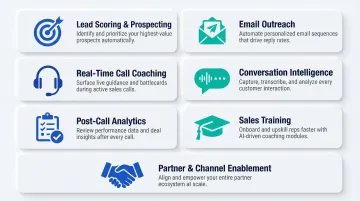
Most team-grade platforms span these core use cases:
- Lead scoring and prospecting, flags high-value opportunities before reps waste time on low-probability deals
- Email outreach, personalizes messages at scale and improves reply rates
- Real-time call coaching, surfaces talking points and objection responses during live conversations
- Conversation intelligence, analyzes calls and meetings to identify deal risk and winning behaviors
- Post-call analytics, automates meeting notes, CRM updates, and follow-up tasks
- Sales training, routes reps into targeted coaching based on actual performance gaps
- Partner and channel enablement, supports resellers, distributors, and alliances with training, content, and deal resources
Best AI-Powered Sales Assistant Software for Teams
Each tool below was selected for AI depth, team-wide utility, integration range, and value across revenue organizations of different sizes, from high-velocity sales floors to complex partner ecosystems.
Pifini.ai
Pifini is an AI-driven revenue enablement platform built for sales teams and partner ecosystems that unifies training, content management, AI coaching, and buyer engagement in one platform. Its customer base includes AMD, Blue Cross, Sabre, and Hexagon.
Where Pifini stands out from other sales AI tools:
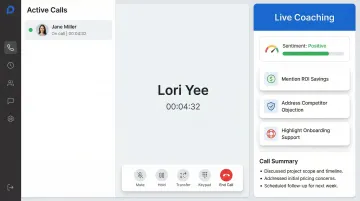
- Live AI call coaching surfaces guidance to reps during active customer calls
- Prescriptive LMS detects performance gaps and auto-enrolls reps into targeted training
- Partner-first architecture supports resellers, distributors, and alliances, a gap most sales AI tools don't address
| Key Features | Live AI call coaching, AI-powered roleplay and call scoring, enterprise LMS with prescriptive learning, gamification and microlearning, real-time buyer engagement insights, partner ecosystem support |
|---|---|
| Pricing | $50/user/year, notably more affordable than legacy competitors like Seismic, Bigtincan, and Mindtickle |
| Best For | Revenue teams managing both direct sales and partner/channel ecosystems who want an all-in-one enablement platform without enterprise-level costs |
Gong
Gong is one of the most recognized conversation intelligence platforms, designed to capture and analyze every customer interaction, calls, emails, and meetings, to surface deal risk, winning behaviors, and coaching moments across an entire sales team.
Its AI models learn from millions of sales conversations to pinpoint which behaviors drive closed-won outcomes, giving managers data-backed coaching points rather than gut-feel feedback. Gong's Deal Predictor and deal likelihood score give leadership pipeline visibility without chasing rep updates. Organizations report a 34% win rate increase and 481% ROI over three years.
| Key Features | Conversation intelligence, deal tracking, AI-driven coaching recommendations, pipeline inspection, forecast analytics, CRM auto-sync |
|---|---|
| Pricing | Contact-for-quote (licenses priced per user plus mandatory platform fee) |
| Best For | Mid-to-large sales teams that need deep visibility into deal health and manager-led coaching at scale |
Dialpad Sell
Dialpad Sell is an AI-powered sales communication and coaching platform that combines a cloud phone system with real-time AI assistance, delivering live coaching cards, automated call summaries, and QA scorecards for every sales call.
The standout feature: Real-Time Assist (RTA) cards push relevant talking points and objection responses to reps during live calls, not after. AI playbooks then identify the scripts that close the most deals so teams can standardize what works. Independent research shows handle time reduced by up to 30% and 4.5 minutes saved per call.
| Key Features | Real-time assist cards, AI playbooks, automated call transcription and summaries, QA scorecards, live sentiment analysis, power dialer |
|---|---|
| Pricing | Essentials ($49/user/month), Advanced ($110/user/month), Premium ($170/user/month); AI call assistance features require higher-tier plans |
| Best For | High-velocity sales teams that run a significant volume of outbound and inbound calls and want live AI coaching without a separate tool |
HubSpot Sales Hub
HubSpot Sales Hub is a CRM-native sales platform with AI capabilities built into its Breeze suite, including a Prospecting Agent that automates lead research, personalized outreach sequences, and follow-up scheduling directly within the HubSpot ecosystem.
Because the AI runs natively inside the CRM, it draws on existing contact records, engagement history, and deal data to produce more relevant outreach, no data-sync friction from bolting on a separate tool. HubSpot also offers outcome-based pricing at $1.00 per lead recommended for outreach through its Prospecting Agent, which is a notable departure from standard per-seat models.
| Key Features | Breeze AI Prospecting Agent, AI-generated email sequences, deal pipeline analytics, automated follow-ups, meeting scheduling, CRM-native workflow automation |
|---|---|
| Pricing | Professional tier starts at $90/seat/month (annual) or $100/seat/month (monthly); Breeze AI features require Professional tier or higher |
| Best For | Teams already using HubSpot CRM that want AI features embedded natively rather than integrating a separate tool |
Lavender
Lavender is an AI email intelligence platform that operates as a browser extension inside reps' inboxes, analyzing emails in real time, scoring them for clarity and reply likelihood, and coaching reps to write better outreach messages at both the individual and team level.
Unlike most email tools, Lavender's team-level dashboard tracks open rate, reply rate, and writing clarity across all reps, giving managers a quality signal without reading individual emails. Organizations report a 580% reply rate increase and 30-45 minutes saved daily per rep.
| Key Features | Real-time email scoring and coaching, personalization assistant, team performance dashboard, email template analysis, mobile preview, CRM and inbox integrations |
|---|---|
| Pricing | Team Plan at $99/seat/month ($89/seat/month billed annually) |
| Best For | Sales teams where email is the primary outreach channel and managers want data-driven visibility into rep email performance |
Key Features to Look For in an AI Sales Assistant for Teams
The most important distinction is between true AI (machine learning that improves with data, NLP that understands context and generates human-like responses) versus basic automation (rule-based triggers). Before committing to a platform, verify it actually learns from data, not just fires pre-set triggers.
Non-Negotiable Integration and Operational Requirements
Four criteria separate tools worth evaluating from those that create new problems:
- CRM integration depth: Does the AI work natively inside your CRM, or demand constant tab-switching? Native integrations eliminate manual data entry and keep insights inside your existing tools.
- Communication tool compatibility: Phone, email, and video support lets your team adopt AI without abandoning familiar workflows.
- Team and partner scalability: A tool that works for 10 reps may break down at 100, or fail entirely when extended to channel partners and resellers.
- Role-based access: Reps, managers, and leaders each need filtered views. Dashboards that show everything to everyone create noise and security exposure.
Total Cost of Ownership
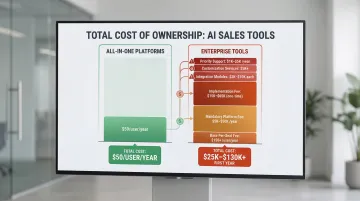
Cost transparency is a commonly overlooked factor. Many enterprise tools charge per seat, per module, and add-on fees that multiply quickly. Enterprise TCO often includes mandatory platform fees ($5K-$50K) and implementation fees ($15K-$65K) that push actual costs far beyond initial quotes.
Get all-in pricing before comparing platforms. Key questions: Is the LMS included, or a paid add-on? Are partner users counted separately? For organizations with large channel ecosystems, per-seat fees across hundreds of resellers can dwarf the base platform cost.
How We Chose the Best AI Sales Assistants for Teams
Every tool on this list was evaluated against criteria that matter for teams, not just individual reps:
- AI depth: Genuine intelligence (coaching, scoring, prediction) vs. basic automation
- Team-use features: Manager dashboards, coaching workflows, onboarding support, shared analytics
- Integration flexibility: CRM, PRM, video, and API compatibility
- Pricing transparency: Clear per-user costs with no hidden tiers
- Channel coverage: Ability to serve both direct sales and partner/reseller scenarios
The most common mistake teams make is buying individual-rep tools and expecting them to scale. Without manager oversight and team-wide analytics, consistent execution falls apart.
Only 28% of AI use cases fully meet ROI expectations, according to Gartner, largely because organizations deploy point solutions without accounting for team-wide adoption and integration complexity.
Each tool on this list leads in a specific use case, outreach, call coaching, pipeline visibility, email performance, or full-stack enablement. Identify your team's biggest gap first, then evaluate from there.
Conclusion
The AI sales assistant landscape has moved well past email templates and basic automation. Today's platforms deliver real-time call coaching, predictive analytics, partner enablement, and buyer engagement, often within a single subscription.
The right platform fits your team's structure, selling motion, and scalability needs, not just the vendor's brand recognition. Teams managing both direct reps and partner networks need solutions built specifically for that complexity, not tools retrofitted from internal-only designs.
For teams that want a unified platform covering live call coaching, training, content, partner enablement, and buyer engagement, at $50/user/year versus $300–$600 with legacy competitors, Pifini.ai is worth a closer look. Request a demo to see how it fits your revenue operations.
Frequently Asked Questions
What is AI-powered sales assistant software for teams?
AI sales assistant software uses machine learning, NLP, and predictive analytics to help entire sales teams work more efficiently, covering use cases from lead scoring and email coaching to real-time call assistance and performance analytics. Team-grade tools also offer manager dashboards and training support, not just individual productivity features.
How does AI sales assistant software improve team performance?
AI sales assistants automate data entry, follow-ups, and meeting notes while surfacing insights from customer interactions. Managers gain visibility into skill gaps before they affect quota, and reps get consistent coaching that compounds over time.
What features should I look for in an AI sales assistant for a sales team?
Prioritize CRM integration, real-time call coaching, team-level analytics, and transparent all-in pricing. Confirm the platform uses true AI, machine learning and NLP, rather than rule-based automation dressed up as AI.
Can AI sales assistants support partner and channel sales teams?
Most AI sales tools are built for direct sales motions and lack partner-specific features. Platforms like Pifini.ai are specifically designed for partner ecosystems, including resellers, distributors, and alliances, with features like partner-facing training, certifications, co-selling support, and channel-specific analytics.
How is AI sales assistant software different from a CRM?
CRMs primarily store and organize customer and deal data, while AI sales assistants actively analyze that data to generate recommendations, coach reps, automate outreach, and predict outcomes. The two are complementary, and the best AI assistants integrate natively with CRMs to eliminate data sync friction.
What does AI sales assistant software typically cost for a team?
Pricing ranges from $50/user/year for all-in-one platforms like Pifini.ai to $300–$600+/user/year for enterprise tools like Gong, Seismic, and Mindtickle. When evaluating enterprise options, factor in platform fees, implementation costs, and per-module charges, these add up fast.